Best Espresso Machine for Beginners
As an Amazon Associate, we earn from qualifying purchases.
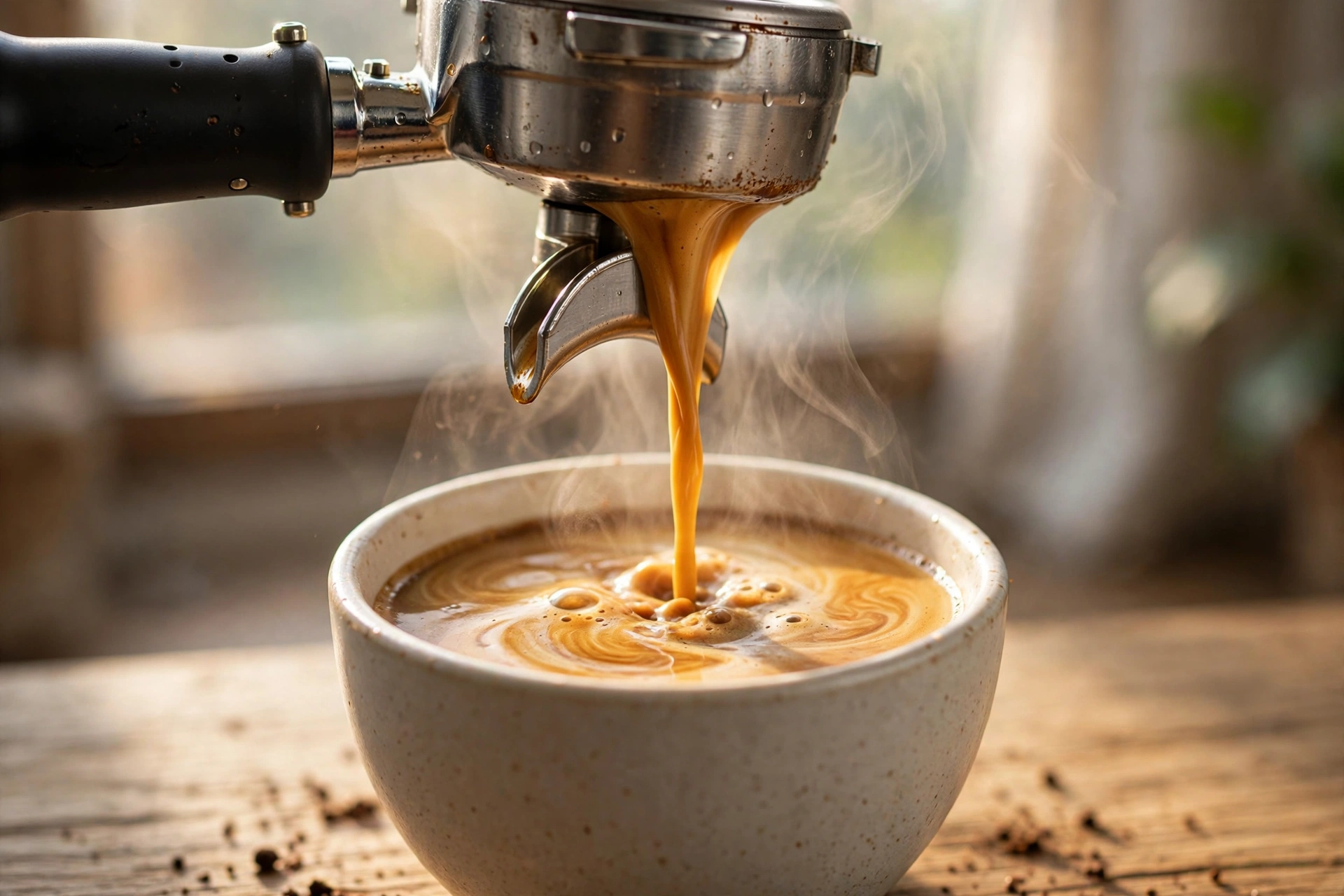
So you want to make real espresso at home — not the bitter, watery stuff, but the kind with a golden crema and that rich, syrupy flavor you get at your favorite café. That’s exactly what a good beginner espresso machine can do.
The good news: you don’t need to spend thousands or understand terms like “pre-infusion” and “PID” to start. Today’s beginner-friendly machines do a lot of the hard work for you, and every pick below is designed for someone who’s never pulled a shot before.
We’ve sorted our four favorites by what matters most to a beginner: ease of use, forgiving results, and whether you also need a grinder. Let’s find your match.
Our Top Picks at a Glance
| Product | Best for | Price |
|---|---|---|
| Breville Barista Express | All-in-one starter with built-in grinder | Premium |
| Breville Bambino | Small kitchens & fast heat-up | Mid-range |
| De’Longhi ECP3420 | Classic, simple espresso on a budget | Budget |
| De’Longhi Stilosa | First-ever machine, gentle learning curve | Budget |
Breville Barista Express
Best overall beginner espresso machine
If you want one machine that does it all, this is the one. The Barista Express has a built-in conical burr grinder, so you go from whole beans to a finished espresso shot in about a minute — no separate grinder to buy or figure out. The manual steam wand lets you practice making silky milk for lattes and cappuccinos, and the pressurized filter baskets are forgiving if your grind isn’t perfect yet.
Breville Bambino
Best for small kitchens and quick morning shots
The Bambino is tiny — it takes up hardly any counter space — yet it heats up remarkably fast thanks to its ThermoJet heating system, so your espresso is ready almost as soon as you are. It offers precise temperature control and gentle pre-infusion for balanced flavor, plus a steam wand with adjustable milk temperature and texture. If you already own a grinder (or plan to buy one soon), this compact machine is a fantastic next step.
De’Longhi ECP3420
Best budget classic espresso machine
The ECP3420 has been a beginner favorite for years, and it’s easy to see why: a 15-bar pump, a built-in milk frother for lattes and cappuccinos, and simple dial controls that don’t require a manual to understand. It handles single and double shots, fits taller cups, and cleans up easily with a removable water tank and drip tray. Pair it with a decent burr grinder and you’ll be making drinks you’ll genuinely be proud of.
De’Longhi Stilosa
Best first-ever machine for the cautious beginner
If you’ve never owned an espresso machine and just want to learn the basics without a big investment, start here. The Stilosa offers 15 bars of pump pressure for real espresso extraction, a manual milk frother for creamy lattes, and a stainless steel boiler built for steady performance. It even includes a tamper, measuring spoon, and both single and double shot filters — everything a beginner needs in the box.
What to Look For When Buying Your First Espresso Machine
- Pump pressure: Look for at least 9 bars of pump pressure — that’s the standard needed to push water through finely ground coffee and create real espresso. All four picks above clear that bar easily.
- Grinder or no grinder: Freshly ground beans make a huge difference. If you don’t own a grinder, an all-in-one machine like the Barista Express simplifies everything; otherwise, budget for a separate burr grinder.
- Milk steaming: Want lattes and cappuccinos? Make sure the machine has a steam wand or milk frother. A manual wand gives you room to grow as your skills improve.
- Ease of cleaning: As a beginner, you’ll appreciate removable water tanks and drip trays. Simple maintenance means you’ll actually use the machine every day.
- Forgiving filter baskets: Pressurized (dual-wall) baskets are beginner-friendly — they produce good crema even if your grind size isn’t perfect yet.
- Size and heat-up: If counter space is tight or mornings are rushed, a compact machine that heats up quickly will make your daily routine much smoother.
Making espresso at home is a skill, and like any skill, it gets better with practice. Start with a machine that matches your budget and patience level, grab some fresh whole beans and a burr grinder if you need one, and give yourself permission to make a few imperfect shots. Within a week or two, you’ll be pulling shots that make the café trip feel optional.